About this product
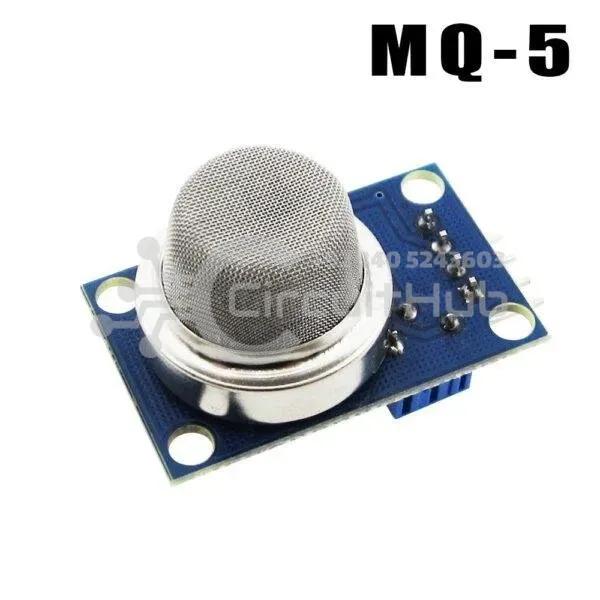
The MQ-5 gas sensor module detects LPG, natural gas, methane (CH₄), hydrogen (H₂) and carbon monoxide (CO). It gives both an analog voltage (AO) proportional to gas level and a digital TTL output (DO) that flips when a user-set threshold is reached — perfect for Arduino
and other microcontroller projects.
Key Features
- Detects LPG, natural gas, CH₄, H₂ and CO
- Fast response and stable output
- Dual outputs: AO (analog) and DO (digital)
- Adjustable threshold via onboard potentiometer
- Simple drive circuit; easy to integrate into hobby projects
- Long working life when used per datasheet recommendations
Quick Specifications (at a glance)
- Working Voltage: 5V (4.9V - 5.1V)
- Heater Resistance: ~31 Ω (±10%)
- Sensing Resistance Range: 10 kΩ – 60 kΩ
- Typical Detection Range: 200 – 10,000 ppm (depends on gas)
- Power: sensor heater consumption ~0.5–800 mW (module dependent)
Pinout / Connections
- Vcc: +5V power
- GND: Ground
- AO: Analog output (read with ADC, e.g. Arduino A0)
- DO: Digital output (HIGH/LOW depending on threshold)
How it works?
The MQ-5 sensor element changes resistance when it detects target gases. The module converts that
change into an analog voltage (AO). The onboard potentiometer sets a threshold that controls the
digital output (DO). Use AO for concentration relative readings and DO for simple alarm/trigger logic.
Basic Wiring
- Connect Vcc → Arduino
5V
- Connect GND → Arduino
GND
- Connect AO → Arduino analog pin (example:
A0)
- Connect DO → Arduino digital pin (example:
2) — optional
Calibration & Practical Tips
- Warm-up: Let the sensor warm up for 1–10 minutes (or longer) after power-up — readings are unstable while cold.
- Threshold: Use the potentiometer to set the DO trigger for the concentration level you want.
- AO readings: Analog values are relative — to estimate ppm you need calibration with known gas concentrations.
- Placement: Install the sensor where gas could reasonably accumulate (low for LPG, higher for lighter gases), and avoid strong drafts that dilute readings.
- Power stability: Use a stable 5V supply; noisy supply lines affect readings.
Common Applications
- Home gas-leak detection (LPG / city gas)
- Gas leak alarms for kitchens or appliances
- DIY safety and monitoring projects with microcontrollers
- Small-scale environmental monitoring (relative measurements)
Safety Notes
- This sensor is for detection/alerting and hobby use. It is not a certified replacement for commercial safety equipment.
- Always test and verify with proper calibration and follow local safety regulations for gas detection.
Tip: For more precise results combine the MQ-5 analog reading with calibration data or use a professional, certified gas detector for life-safety applications.